.webp) grinh5.com
grinh5.comThe Invisible Ledger: Analyzing the Tug-of-War Between E-Sports Hyper-Balance and Monetization Creep in Honor of Kings
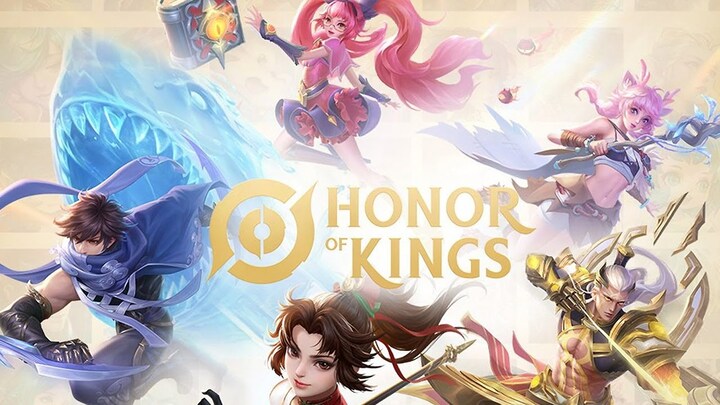
When TiMi Studio Group launched Honor of Kings (HoK) in late 2015, few anticipated it would evolve into a cultural institution, a multi-billion-dollar juggernaut, and the foundational benchmark for mobile Multiplayer Online Battle Arenas (MOBAs). Generating billions annually while hosting a daily active user base exceeding 100 million, the title occupies a unique position in interactive entertainment. However, underneath its polished high-frame-rate rendering and accessible 5v5 action lies an ongoing structural tension: the delicate balance between hyper-competitive e-sports integrity and revenue-driven monetization creep.
In traditional mobile gaming, aggressive monetization often exists at the expense of competitive fairness. Conversely, hardcore e-sports titles usually sacrifice massive casual revenue streams to protect mechanical purity. Honor of Kings attempts to sit directly on the fence, offering a high-stakes, international e-sports ecosystem (KPL) while aggressively monetizing high-tier cosmetic skins,stat-boosting arcana, and limited-time events. This deep-dive examines how TiMi Studios navigates this conflict, evaluating whether the game's mathematical balance can truly survive the financial incentives of its own hyper-profitable ecosystem.
1. The Birth of the Mobile MOBA Formula (2015–2017)
The early era of Honor of Kings was defined by translating the complex mechanics of PC MOBAs like League of Legends and Dota 2 into a fluid, touchscreen-friendly experience. TiMi Studios stripped away lengthy laning phases and micro-heavy last-hitting, opting instead for compressed 15-minute matches, dual-thumb stick controls, and accelerated gold distribution. During this foundational period, monetization was straightforward: purchasing heroes directly, acquiring basic cosmetic skins, and investing in the original Arcana System.
The initial iteration of the Arcana System presented the game's first significant balance controversy. Providing raw stat buffs—such as physical attack, armor penetration, movement speed, and critical strike chance—Level 5 Arcana pages gave veteran or paying players a distinct numerical advantage before a match even began. While Arcana could technically be earned through gameplay, the sheer time sink required to fill out optimal pages created an uneven playing field for newcomers, exposing an early friction between player retention, financial conversion, and competitive fairness.
2. The E-Sports Mandate: Establishing the King Pro League (2016–2018)
As the King Pro League (KPL) grew into a broadcast behemoth with millions of concurrent viewers, the demand for absolute mechanical balance became non-negotiable. Pro teams could not afford to lose high-stakes matches due to system-level stat discrepancies or unintended character interactions. This e-sports mandate forced TiMi Studios to establish a dual design philosophy: maintaining an accessible, flashy game for casual players while meticulously tuning frames, hitboxes, and damage scalars for elite play.
Key Structural Reforms for E-Sports Standardization
- Arcana Rework: Transitioned the Arcana system to a system where base stats were standardized, allowing players to unlock and upgrade Arcana smoothly without strict paywalls blocking entry-level competitive play.
- Global Bans and Pick System: Introduced draft mechanics to the KPL, compelling professional teams to master expansive hero pools and preventing single-hero meta dominance.
- Frame-Accurate Hitbox Calibration: Re-engineered spell indicators and collision boxes across the roster to ensure visual clarity matched actual damage zones during high-level play.
3. The Geometry of the Map: Balancing Asymmetrical Objectives
Unlike PC MOBAs where symmetrical maps facilitate long-term tactical maneuvering, the condensed layout of the Gorge of Kings demands extreme precision in objective placement. Over the years, TiMi Studios repeatedly redesigned map geometry, brush placement, and neutral objective timers to prevent one side of the map (Blue Side vs. Red Side) from maintaining an unfair win-rate advantage.
The placement of major neutral creeps—the Tyrant (providing team-wide buffs/exp) and the Overlord (spawning powerful wave-pushing drakes)—creates an intense focal point for early and mid-game skirmishes. Because the lanes are short, a single rotation advantage can snowball into destroyed towers within five minutes. Balance patches throughout this era focused heavily on fine-tuning jungle pathing speeds, camp leash distances, and tower damage scaling to ensure comeback mechanics remained viable without rendering early-game aggressiveness useless.
4. The Inflation of Mobility: The "Dash Meta" Creep
A prominent mechanical challenge in Honor of Kings' evolution is the steady escalation of mobility options across newly released heroes. Early heroes possessed relatively straightforward kit designs—simple target-lock CC (crowd control), basic skill-shots, and single dashes. However, as the character roster expanded past 100 heroes, newer additions introduced multi-stage dashes, invulnerability frames (i-frames), and wall-hopping abilities to stand out in the meta.
Mobility Classifications and Systemic Countermeasures
- Hyper-Mobile Assassins (e.g., Li Bai, Nakoruru, Han Xin): Rely on rapid entry/exit maneuvers, forcing developers to balance them around fragile health pools and high execution ceilings.
- Untargetable Skirmishers (e.g., Shangguan Wan'er, Gongsun Li): Feature prolonged i-frames during ultimate abilities, requiring precise hard-CC or suppression effects (e.g., Liang, Dong Huang) to contain.
- Immobile Traditional Mages & Marksmen: Frequently left vulnerable by dash creep, prompting the development team to introduce specialized defensive active talent items (like Splendor/Purify) and specific support buffs to preserve their viability.
5. The Visual Clarity Crisis: Cosmetic Effects vs. Competitive Readability
Honor of Kings generates a significant portion of its multi-billion-dollar revenue through premium, limited-edition, and crossover skin lines. These high-tier skins feature elaborate spell animations, custom voice lines, altered sound effects, and vibrant particle effects. However, this commercial drive directly collides with e-sports readability.
When a skin alters the visual footprint of an ultimate ability—making a stun radius look smaller than its actual hit-box or muting the audio cue of an incoming projectile—it creates a subtle "pay-to-win" dynamic. In response, the KPL established a strict banned skin list for tournament play, prohibiting specific cosmetics that obscure spell cast times or blur character silhouettes. For casual and ranked play, TiMi implemented settings allowing players to streamline spell effects and standardize enemy health bars, preserving visual integrity under chaotic conditions.
6. Dynamic Role Redistribution: The Evolution of the Support Class
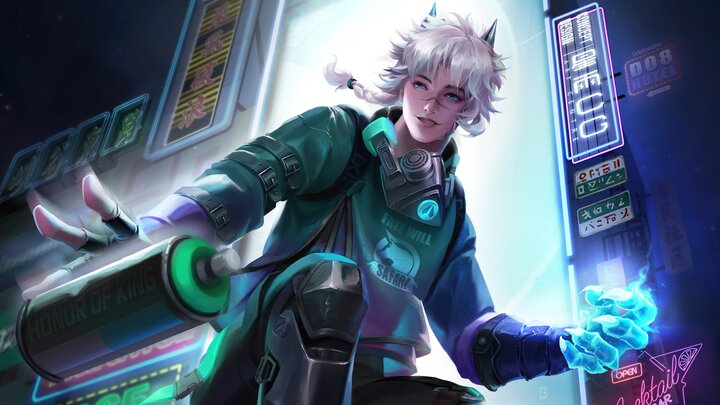
For years, the Support role in Honor of Kings suffered from low pick rates and poor player satisfaction. Supports were expected to function as impoverished vision-bots, buying gold-generating items while yielding all resources to the Jungler and Farm Lane carry. Recognizing that a healthy matchmaking environment requires active participation across all five positions, TiMi overhauled the entire support ecosystem.
Mechanics of the Support Class Rework
- Dedicated Support Items: Introduced aura-based equipment that grants gold and experience passively without stealing resources from nearby laning partners.
- Active Crowd Control & Utility: Re-designed support kits (such as Sun Bin, Dolia, and Da Qiao) to focus on game-changing utility—such as skill-cooldown resets, team teleportation, and time manipulation—rather than acting merely as passive damage sponges.
- Roamer Dynamics: Shifted the meta to encourage Supports to roam with the Jungler or Mid-laner in the early game, creating a dynamic 3-man core that dictates the tempo of the match.
7. The Global Pivot and International Synchronization (2024–2026)
As Honor of Kings expanded beyond mainland China to execute a full global rollout, TiMi Studios encountered its most complex technical and balance challenge yet: synchronizing two distinct versions of the game. Historically, international audiences were served by Arena of Valor (AoV), a localized adaptation with altered character designs and modified skill kits. The decision to deploy the original Honor of Kings globally meant reconciling almost a decade of localized meta adjustments.
To unify the worldwide e-sports pipeline, developers created a standardized tournament client featuring a shared hero pool. Heroes originally exclusive to AoV were systematically adapted, rebalanced, or integrated into the core HoK environment. This process required adjusting base hero stats, cooldown timers, and item trees to ensure that international teams competing in global invitationals did not face intrinsic disadvantages against domestic Chinese teams accustomed to the legacy roster.
8. Micro-Transactions and the "Pay-for-Stats" Legacy
While major pay-to-win mechanics have been minimized to safeguard competitive integrity, minor legacy systems still spark debate among hardcore players. Most notable is the subtle stat boost attached to hero skins—typically providing a minor bonus (+10 Physical Attack, +10 Magical Attack, or +120 Max Health) depending on the hero's primary archetype.
"In a game where first-blood fights are frequently decided by single-digit damage margins, even a +10 attack stat attached to a paid cosmetic represents a theoretical breach of pure competitive neutrality."
While the development team offsets this by offering free basic skins through seasonal events and reward tokens, the design choice remains a deliberate bridge between revenue generation and system design. At casual and mid-tier ranked levels, +10 attack rarely dictates the outcome of a match compared to positioning and objective control; however, at the highest ranks, any baseline numerical discrepancy remains a point of critique among purists.
9. Algorithmic Matchmaking and the Retention Engine
Beyond raw character balance, the internal algorithm governing matchmaking—the Engine that pairs solo players and pre-made teams—plays a crucial role in the competitive experience. Honor of Kings utilizes sophisticated Matchmaking Rating (MMR) algorithms designed to balance win rates while maximizing user engagement and daily retention.
Systems Driving Matchmaking Dynamics
- Eradication of Extreme Win/Loss Streaks: The algorithm dynamically pairs players on extended win streaks with struggling teammates to enforce equilibrium across rank divisions.
- Protection Star Tokens & Loss Prevention: Seasonal ranking systems grant protection cards and bravery points, mitigating the penalty of a loss and driving rank inflation across the casual player base.
- Role-Based Queue Optimization: Implemented to prevent multi-DPS or multi-jungle team compositions, ensuring players get their preferred roles while maintaining baseline team composition standards.
10. Conclusion: The Perpetual Balance on a Moving Wire
The ongoing evolution of Honor of Kings demonstrates that maintaining a blockbuster mobile MOBA is not a static task with a final destination, but a continuous act of mechanical recalibration. TiMi Studio Group has built an entertainment system by pairing accessible, fast-paced mobile gameplay with a high-ceiling e-sports ecosystem. Yet, as monetization methods grow more complex and the roster expands, the friction between commercial goals and competitive purity requires constant management.
The game’s true achievement is not that it has completely eliminated balance issues or monetization friction, but that it has established a framework robust enough to survive them. By actively adjusting map mechanics, standardizing tournament conditions, reworking legacy systems, and tuning hero mobility, Honor of Kings proves that high-level e-sports integrity and massive commercial success can co-exist on the same mobile screen.
HoK relies on strict e-sports balance and aggressive monetization, creating an ongoing tension between competitive purity and financial growth.